
Transgender Facial Hair Removal Options for Lasting Confidence

Choosing facial hair removal can feel personal, practical, emotional, and sometimes overwhelming all at once. If shaving every morning still leaves shadow, irritation, bumps, or dysphoria, you’re not being dramatic. You’re dealing with hair follicles that need a real plan.
For many trans women, transfeminine people, and nonbinary adults, transgender facial hair removal options usually come down to three paths: laser hair removal, electrolysis, or a strategic combination of both. The right choice depends on your skin tone, hair color, goals, pain tolerance, budget, and whether you’re preparing for gender-affirming surgery.
Major clinical guidance recognizes hair removal as part of gender-affirming care. The WPATH Standards of Care Version 8 includes hair removal from the face, body, and genital areas for gender affirmation or preoperative preparation, naming electrolysis and laser epilation as options.
Transgender Facial Hair Removal Options at a Glance
| Option | Best For | Permanence | Key Limitation |
|---|---|---|---|
| Electrolysis | All hair colors and skin tones | Permanent removal | Slower process |
| Laser Hair Removal | Dark hair with suitable skin contrast | Long-term reduction | Not ideal for light hair |
| Combination Plan | Dense facial hair, mixed colors | Efficient path | Requires planning |
| Temporary Methods | Short-term grooming | Temporary | Shadow and irritation |
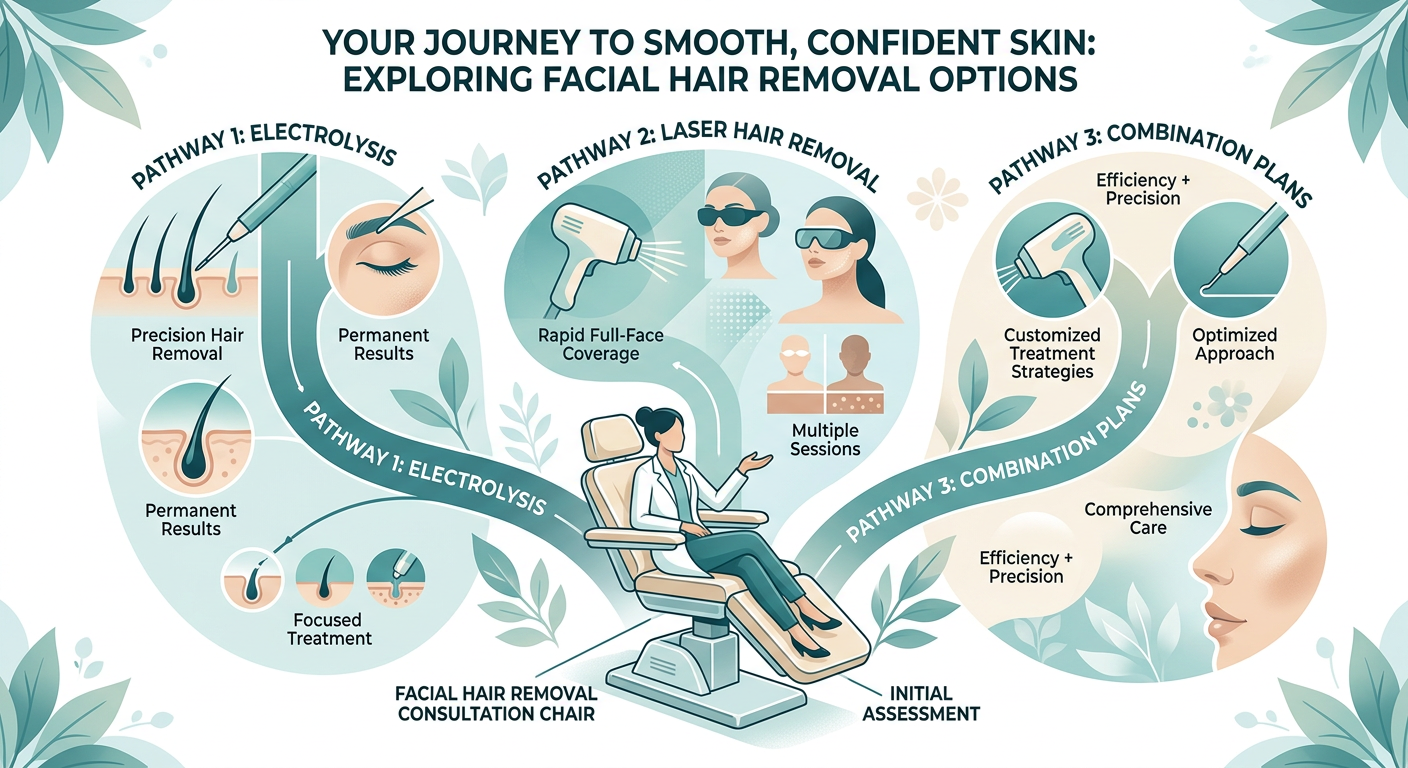
Electrolysis for Permanent Facial Hair Removal
Electrolysis is the most definitive option for facial hair because it treats each follicle individually. A fine probe is placed into the natural follicle opening, then energy is used to disable the cells responsible for regrowth.
The biggest advantage is versatility. Electrolysis can treat dark, blonde, red, gray, white, and fine hairs, and it works across all skin tones. That matters because laser depends on pigment contrast, while electrolysis does not.
The Cleveland Clinic states that electrolysis is the only FDA-approved method for permanent hair removal. That’s why many people use it for final clearing, stubborn upper lip hairs, chin hairs, gray hairs, and areas where laser can’t see the pigment.
The tradeoff is time. Facial hair grows in cycles, so you’ll need consistent appointments over many months. Dense beard areas often require a structured schedule, and larger clearings may need longer sessions with comfort planning.
Laser Hair Removal for Beard Shadow Reduction
Laser hair removal targets melanin in the hair shaft and follicle. It’s often a strong first step when facial hair is dark enough for the laser to target safely and effectively.
Here’s the thing: laser is usually faster across dense areas like the cheeks, neck, jawline, and upper lip. It can reduce bulk, soften regrowth, and make shaving easier while you continue toward longer-term goals.
A medical review in StatPearls via NCBI Bookshelf explains that laser provides permanent hair reduction rather than permanent removal. In plain English, that means laser can dramatically reduce hair growth, but it may not eliminate every follicle forever.
Laser also has limits. Very light, white, gray, and red hairs usually don’t respond well because there isn’t enough pigment. Skin tone matters too, which is why device selection and provider experience are critical, especially in Phoenix where sun exposure can affect treatment timing and safety.
Why Many Clients Use Both Laser and Electrolysis
For many transgender facial hair removal plans, the most efficient answer isn’t either-or. It’s both.
Laser can reduce dense dark facial hair first. Then electrolysis can permanently clear the remaining hairs, especially lighter hairs, scattered regrowth, or follicles that laser didn’t fully disable. This combination can help reduce total time spent clearing each individual dark hair by electrolysis alone.
At Senza Pelo Med Spa in Phoenix, customized planning may include Laser Hair Removal Phoenix and Electrolysis Permanent Hair Removal depending on hair color, skin type, density, and long-term goals. This is especially helpful for clients traveling from Scottsdale, Glendale, Peoria, Tempe, Mesa, Paradise Valley, and across the Greater Phoenix area.
Temporary Facial Hair Removal Methods Still Have a Place
Shaving, trimming, color correction makeup, depilatory creams, waxing, and threading may help in the short term. They’re not wrong, and for some people, they’re necessary between professional sessions.
But they don’t change the follicle in a lasting way. Waxing and tweezing can also interfere with laser and electrolysis scheduling because they remove the hair from the follicle, which can make treatment less effective or harder to time.
If you’re actively pursuing long-term facial hair removal, ask your provider what to do between appointments. In many cases, shaving or clipping is preferred because it preserves the follicle for treatment.
Hormones May Help, But Usually Don’t Remove Facial Hair
Feminizing hormone therapy may reduce hair growth speed, thickness, and density for some people. That can be meaningful, especially for body hair.
Facial hair is different. A systematic review in Clinical and Experimental Dermatology found that feminizing hormone therapy may reduce facial and body hair growth, but it may be inadequate for eliminating masculine-pattern facial hair. The same review notes that laser hair removal and electrolysis are commonly used by trans women for further gender affirmation.
That’s why it’s realistic to view hormones and hair removal as separate tools. Hormones may change growth patterns, while professional hair removal targets follicles directly.
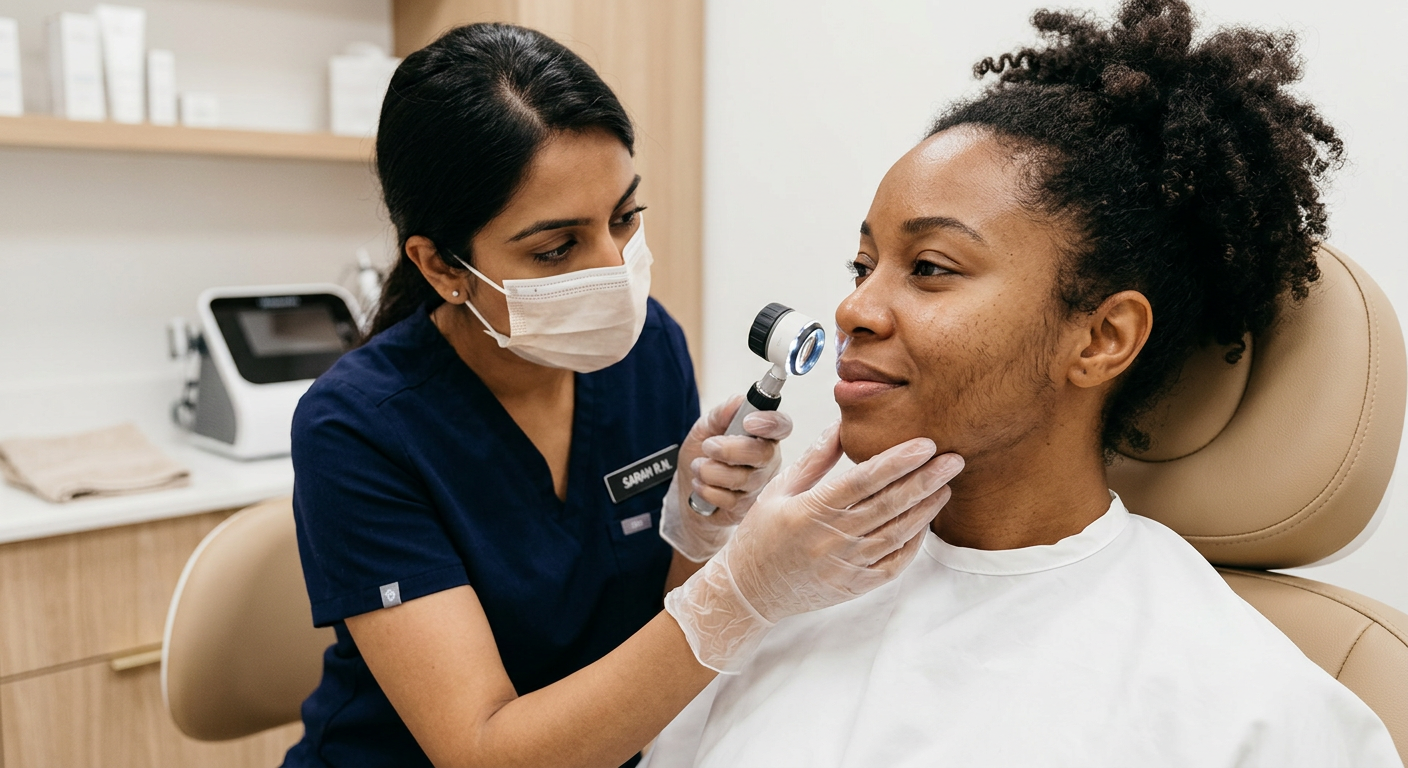
What to Expect During a Consultation
A good consultation should feel respectful, specific, and pressure-free. Your provider should evaluate hair color, skin tone, density, treatment history, medications, sun exposure, sensitivity, and goals.
You should also talk about pain management, appointment length, aftercare, and budget. For large-volume electrolysis or dense facial hair, comfort planning can make a major difference.
If surgery preparation is part of your plan, bring any surgeon-provided hair removal map or written requirements. Areas and timelines can vary, and the safest plan is one that matches your surgeon’s instructions.
Preparing for Facial Hair Removal in Phoenix
Phoenix sun exposure matters. Before laser, you’ll usually need to avoid tanning and self-tanner, because extra pigment in the skin can increase risk of irritation or pigment changes.
For electrolysis, your provider may ask you to arrive with enough visible growth to treat. That can feel emotionally difficult, so it’s worth planning appointments around work, social events, and dysphoria triggers.
After treatment, expect some temporary redness, warmth, or swelling. Gentle skin care, sunscreen, and avoiding heat-heavy activities for a short window can help your skin recover.
Plan Your Next Step With a Phoenix Hair Removal Specialist
If you’re ready to compare options, schedule a private consultation with transgender hair removal specialists in Phoenix who understand both the technical and emotional sides of care. You can also view pricing before you book.
Call (602) 246-1966 or Schedule Your Appointment online to discuss laser, electrolysis, or a combined treatment plan.
Frequently Asked Questions
Is electrolysis better than laser for transgender facial hair removal?
Electrolysis is best for permanent removal and works on all hair colors and skin tones. Laser is often faster for reducing dense dark hair. Many clients get the best practical result by using laser first, then electrolysis for remaining hairs.
How long does facial electrolysis take?
It varies widely based on hair density, session length, growth cycles, and consistency. Many people need regular appointments for many months, sometimes longer for dense beard areas.
Can laser remove beard shadow?
Laser can reduce dark facial hair and often helps soften beard shadow. It won’t work well on gray, white, blonde, or some red hairs, which usually need electrolysis.
Should I start hair removal before hormones?
You don’t always need to wait. Some people start before hormones, while others begin after hormone therapy has slowed growth. A consultation can help you choose timing based on your goals.
Can I wax or tweeze between sessions?
Usually, no. Waxing and tweezing remove the hair from the follicle and may interfere with treatment timing. Shaving or clipping is often preferred, but follow your provider’s instructions.
Is facial hair removal painful?
Most people describe laser as a quick snapping sensation and electrolysis as a warm pinch or sting. Sensitivity varies by area, and comfort options may be available.
Are transgender hair removal services covered by insurance?
Coverage varies by insurer and medical necessity documentation. If your plan offers reimbursement, ask your provider for detailed receipts and ask your insurer what documentation is required.
The Bottom Line on Long-Term Facial Hair Removal
There isn’t one perfect path for everyone. Laser can be efficient for dark hair reduction, electrolysis is the permanent solution for all hair colors, and a combined plan often makes the most sense for dense facial hair.
The best choice is the one that respects your skin, your identity, your timeline, and your budget. With the right provider and a realistic plan, facial hair removal can become less of a daily battle and more of a steady step toward comfort in your own skin.
About Senza Pelo Med Spa
Senza Pelo Med Spa has been serving Phoenix since 1982 and is one of Arizona’s most experienced providers of Electrolysis, Laser Hair Removal, and Permanent Hair Removal services.
We specialize in helping clients achieve long-term results through customized treatment plans, advanced technology, and personalized care.
Call (602) 246-1966 or Book Your Appointment Online today.