
How to Stop Constant Shaving: Long-Term Hair Removal Options

If shaving feels like a chore you have to repeat every morning, every few days, or before every event, you are not alone. The short-lived smoothness can come with stubble, razor burn, ingrown hairs, and a bathroom drawer full of blades and creams.
Learning how to stop constant shaving starts with an honest look at why you shave, how your skin responds, and what result you actually want. Some people simply need a less irritating routine. Others want to reduce dense growth over time or permanently remove individual hairs that keep coming back.
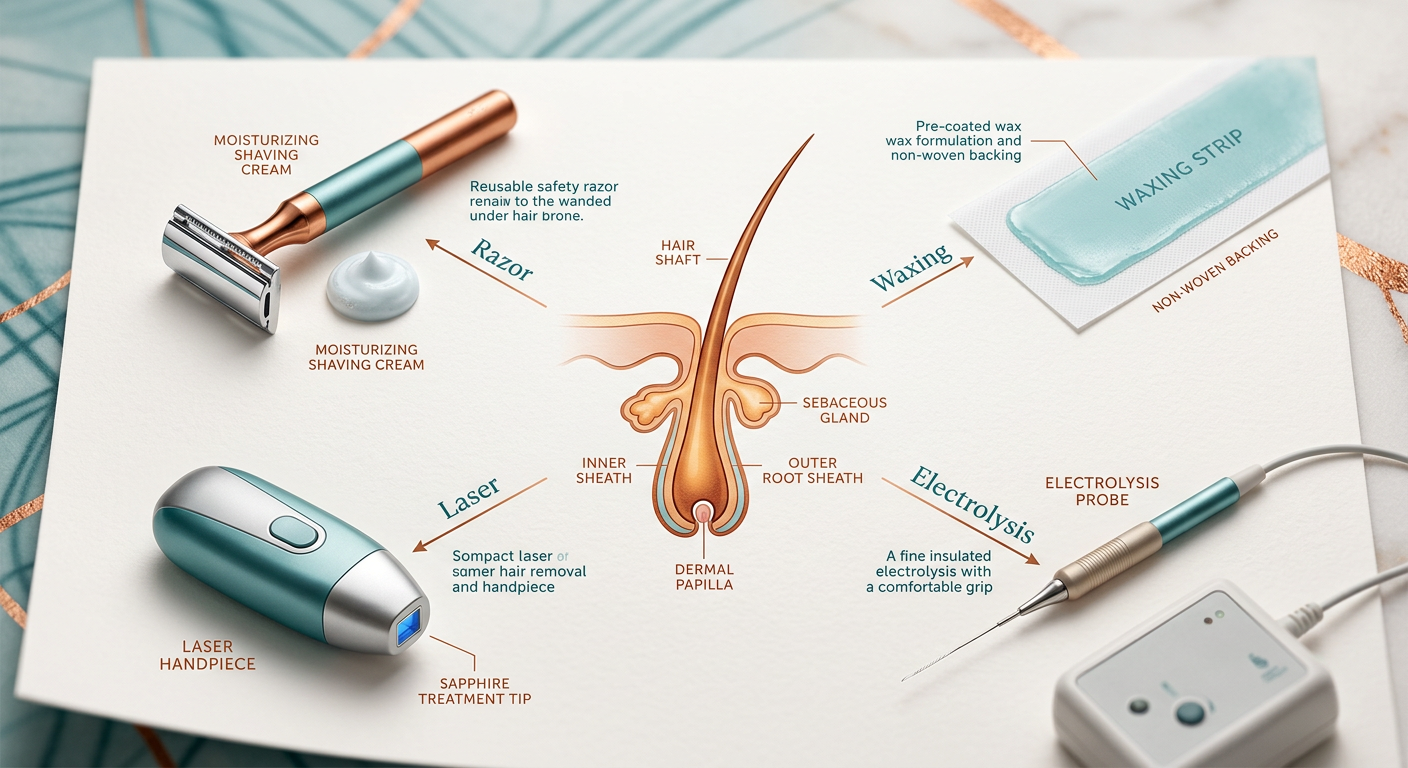
Here is the key distinction: shaving cuts hair at the skin’s surface, so it cannot change the follicle beneath it. Long-term change requires a method that treats the follicle itself, along with a plan that fits your hair color, skin tone, treatment area, hormones, and schedule.
Choose the Right Way to Break the Shaving Cycle
| Option | Best for | Result timeline | Important tradeoff |
|---|---|---|---|
| Better shaving habits | Sensitive skin, short-term relief | Immediate | Hair grows back |
| Waxing or threading | Temporary smoothness | Weeks | Can irritate skin and requires regrowth |
| Laser hair removal | Larger areas with darker hair | Series of sessions | Long-term reduction, not removal of every hair |
| Electrolysis | Any hair color, small or stubborn areas | Series of sessions | Treats one follicle at a time |
Improve shaving while you decide on a longer-term option
We do not recommend pushing through irritation just because shaving feels unavoidable. The American Academy of Dermatology recommends softening skin and hair with warm water, using shaving cream or gel, shaving in the direction of hair growth, and replacing disposable blades after five to seven shaves. Those steps can reduce friction and razor bumps, even if they do not eliminate future hair growth.
Use a clean, sharp blade and avoid repeatedly going over the same patch of skin. Skip aggressive exfoliation immediately after shaving, then use a gentle, fragrance-free moisturizer. If you have painful bumps, pustules, dark marks, or skin that will not calm down, speak with a dermatologist instead of trying to shave through a possible skin condition.
Stop plucking and waxing before professional treatments
Tweezing, threading, and waxing may seem like logical upgrades from shaving, but they can create a frustrating loop of waiting for enough hair to grow back. They can also remove the hair from the follicle, which can interfere with treatments that rely on seeing or targeting the follicle.
For laser sessions, the follicle needs hair present beneath the skin. For electrolysis, the visible hair needs enough length for careful treatment. Your provider will tell you exactly when to shave, trim, or pause other hair-removal methods before an appointment.
How to Stop Constant Shaving With Laser Hair Removal
Laser hair removal uses controlled light energy to target pigment in the hair follicle. It is often a practical choice for larger areas, including legs, underarms, bikini lines, backs, chests, and beard areas, especially when the hair is dark and coarse.
The FDA describes laser hair removal results as permanent hair reduction, meaning a long-term, stable decrease in hairs that regrow after a completed treatment plan. That is valuable for people who want far less shaving, but it is different from promising that every individual hair will never grow again. Cleveland Clinic explains the difference between electrolysis and laser results.
What laser treatment can realistically change
A well-planned series can make hair finer, lighter, slower to return, and much less dense. Many clients move from daily shaving to occasional touch-ups or maintenance, depending on the area and their individual biology.
Hair grows in cycles, which is why several appointments spaced over time are typically needed. Hormonal changes, genetics, medications, and conditions such as PCOS can affect regrowth, so realistic expectations and a personalized plan matter more than a one-size-fits-all package.
For Phoenix, Scottsdale, Paradise Valley, Glendale, Peoria, Mesa, Tempe, and Greater Phoenix clients considering larger treatment areas, our guide to Laser Hair Removal Phoenix explains the process, preparation, and aftercare in more detail.
When Electrolysis Is the Better Long-Term Answer
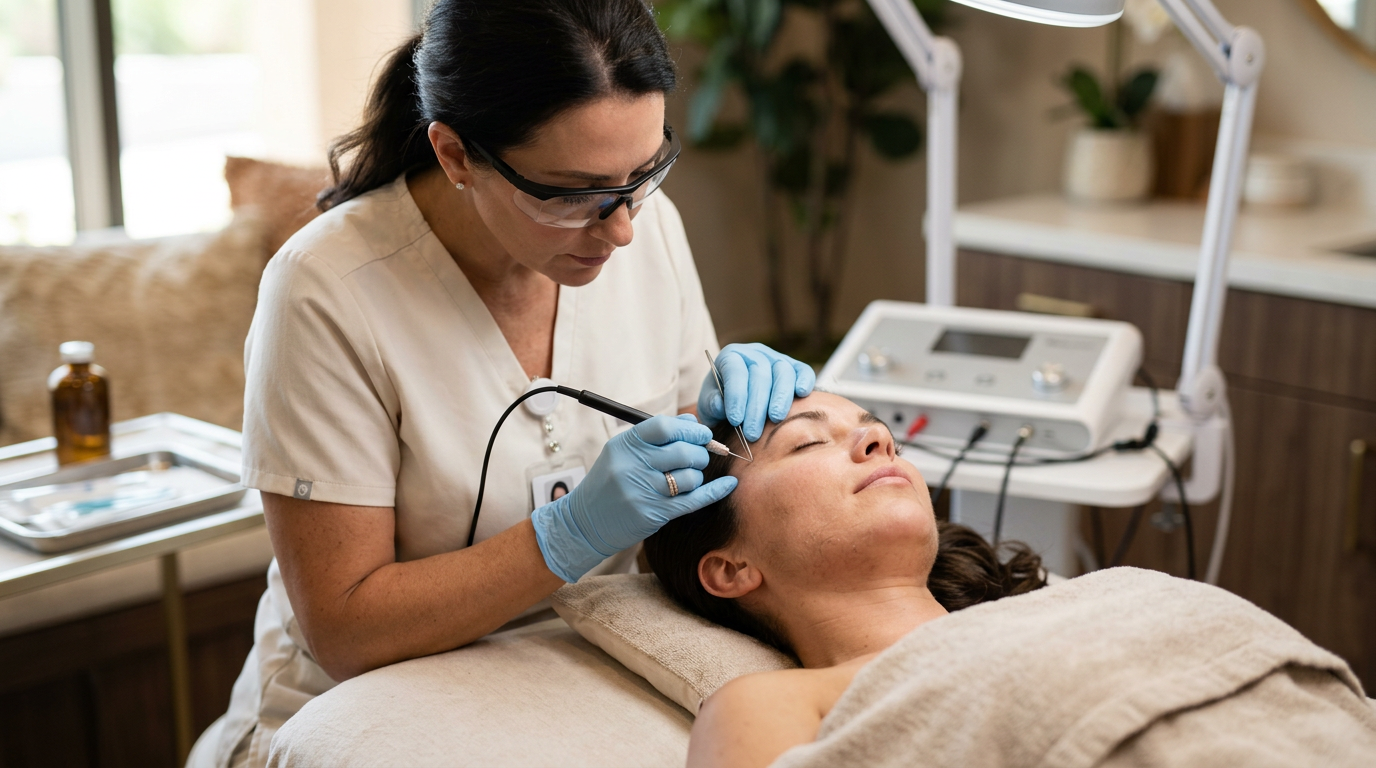
Electrolysis treats each hair follicle individually with a very fine filament and controlled energy. Unlike laser treatment, it can be used on hair of any color, including blonde, gray, white, and red hair, and on many areas where you want detailed, lasting work.
This makes it especially useful for facial hair, chin and upper-lip hair, eyebrows, stray hairs after laser reduction, and hormone-related growth that does not respond well to light-based treatment. Cleveland Clinic notes that electrolysis is the only FDA-approved method for permanent hair removal.
Why it works well for stubborn facial hair
Facial hair can be emotionally exhausting because it is visible every day and often leads to close, frequent shaving. Women managing PCOS-related facial hair, men dealing with ingrown beard and neck hairs, and transgender clients preparing for gender-affirming care may all need precision rather than broad-area reduction.
Electrolysis is not an overnight solution, because only hairs in an active growth phase can be effectively treated. Still, a consistent schedule lets us progressively clear visible hair and work through new growth cycles, instead of sending you back to the razor as the only option.
Learn more about Electrolysis Permanent Hair Removal, including how appointments are planned and what to expect between visits.
Build a Plan Around Your Skin and Hair, Not a Trend
The best answer is sometimes a combination approach. We may use laser hair removal to reduce a broad area of suitable dark hair, then use electrolysis to permanently clear lighter, finer, or remaining hairs. This approach can be particularly helpful for facial hair, bikini areas, beard shaping, and PCOS-related growth.
You should also be cautious with at-home devices. Home IPL products may offer convenience, but they are not the same as professional laser equipment, their results vary widely, and poor fit for your skin and hair characteristics can mean disappointment or irritation. A professional assessment helps you choose a method based on safety and likely benefit, not marketing claims.
Ask these questions before committing
- Is my hair color and density a good match for laser treatment?
- Do I want significant reduction, or permanent removal of individual hairs?
- Are hormones, medications, or a medical condition affecting my growth pattern?
- Do I get ingrown hairs, razor bumps, or post-inflammatory dark marks?
- What preparation and aftercare will protect my skin?
- What will the complete treatment plan cost over time compared with razors, waxes, and repeated appointments?
You can also view treatment pricing before your consultation so you can make a practical, informed decision.
Frequently Asked Questions
Can I stop shaving immediately when I start laser hair removal?
You can usually shave between laser appointments if your provider directs you to do so, but avoid waxing, plucking, and threading because the follicle needs to remain intact for laser targeting. Expect gradual reduction rather than instant smoothness after one session.
Does electrolysis hurt?
Sensitivity varies by body area, hair density, and personal pain tolerance. Most people describe a brief sensation with each treated follicle, and providers can discuss comfort measures, session length, and pacing before treatment begins.
Is laser hair removal safe for darker skin tones?
It can be safe when an experienced provider selects appropriate technology and settings for your skin. This is one reason a consultation and test area can be important, particularly in sunny Arizona where recent tanning and sun exposure may affect treatment timing.
What is best for PCOS facial hair?
PCOS-related hair growth often requires a long-term plan because hormone changes can continue to influence new growth. Laser may reduce suitable dark hair over larger areas, while electrolysis can permanently remove individual facial hairs of any color. Your medical provider can also help manage the underlying condition.
Will laser hair removal get rid of beard shadow?
Laser can substantially reduce dense, dark beard growth and may lessen the appearance of shadow over time. Electrolysis is often used for detailed, permanent clearing when you want to target the remaining hairs or when hair is too light for laser to treat effectively.
How do I prevent ingrown hairs while waiting for treatment results?
Avoid shaving too closely, shave with the direction of growth, use a fresh blade, and do not pick at bumps. If you develop painful or recurring ingrown hairs, a dermatologist can rule out infection or another skin condition and recommend appropriate care.
Put Down the Razor With a Personalized Plan
At Senza Pelo Med Spa, we have served Phoenix since 1982 with individualized electrolysis and laser hair-removal plans. Whether you are tired of chin stubble, shaving a beard line, dealing with razor bumps, or spending too much time managing body hair, we will help you choose a realistic path toward smoother skin and fewer daily chores.
Call (602) 246-1966 or schedule your appointment online to discuss your goals with an experienced professional.
The Bottom Line
You do not have to accept constant shaving as a permanent part of your routine. Better technique can calm irritation today, laser hair removal can reduce dense growth over time, and electrolysis can permanently remove the individual hairs that keep bringing you back to the mirror.
The right choice is the one that respects your skin, hair pattern, budget, and goal. Start with a professional plan, stay consistent with treatment and aftercare, and let each step move you farther from the razor.
About Senza Pelo Med Spa
Senza Pelo Med Spa has been serving Phoenix since 1982 and is one of Arizona’s most experienced providers of Electrolysis, Laser Hair Removal, and Permanent Hair Removal services.
We specialize in helping clients achieve long-term results through customized treatment plans, advanced technology, and personalized care.
Call (602) 246-1966 or Book Your Appointment Online today.