
Ingrown Hair Treatment Options: A Phoenix Guide to Smoother Skin

Few things are more frustrating than shaving an area that looks smooth in the morning, then feeling painful bumps, redness, or trapped hairs a day or two later. For many people, this cycle affects the beard, neck, bikini line, underarms, legs, chest, or anywhere hair is coarse, curly, or removed very close to the skin.
The right ingrown hair treatment options depend on whether you have an occasional bump, frequent razor burn, dark marks, or a recurring pattern that temporary grooming habits keep triggering. We help clients throughout Phoenix, Scottsdale, Paradise Valley, Glendale, Peoria, Mesa, Tempe, and the Greater Phoenix area understand what can calm the skin now and what can reduce the problem over time.
Ingrown Hair Treatment Options at a Glance
| Option | Best for | Main benefit | Important limitation |
|---|---|---|---|
| Gentle home care | Mild, occasional bumps | Calms irritation | Does not stop new hair growth |
| Better shaving habits | Shaving-related bumps | Reduces repeat trauma | Still requires ongoing grooming |
| Dermatology care | Infection, scarring, severe inflammation | Medical diagnosis and treatment | May not remove the trigger permanently |
| Laser hair removal | Larger areas of dark, coarse hair | Long-term hair reduction | Results vary by hair and skin characteristics |
| Electrolysis | Light, gray, blonde, or isolated hairs | Permanent removal of treated follicles | Treats hairs individually |
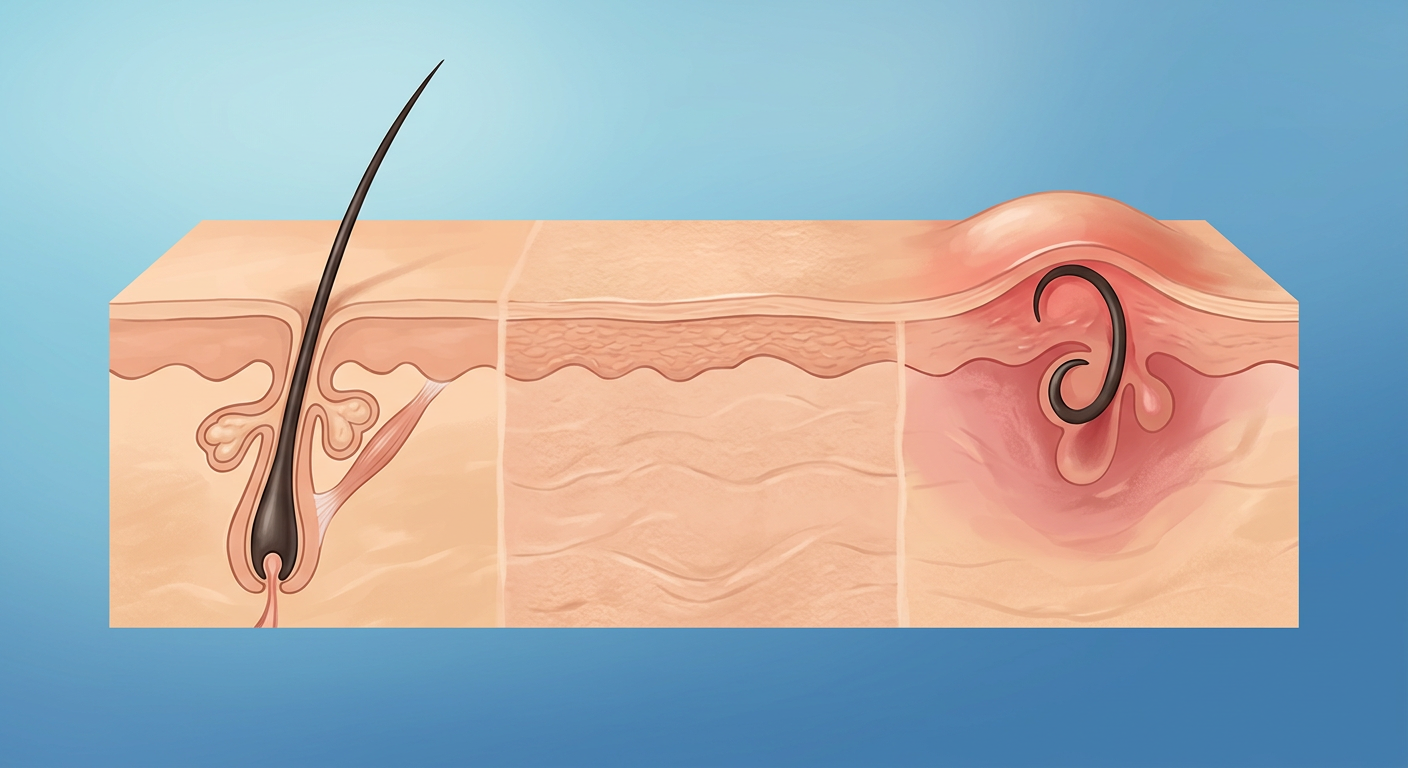
An ingrown hair develops when a removed hair starts growing back into the skin rather than outward. Shaving, waxing, and tweezing can all contribute, and curly or coarse hair may be more likely to curl back into the skin. The Mayo Clinic notes that many cases improve without treatment, but repeated irritation can leave discoloration, scars, or persistent razor bumps.
Start With Calm, Low-Drama Skin Care
When a bump is tender, red, or itchy, the first goal is to reduce irritation, not attack it. Pause shaving, waxing, or tweezing over the area when possible. Use a warm compress, wash gently, and avoid tight clothing or friction around the affected skin.
Resist the urge to dig, squeeze, or use a needle to free a trapped hair. That can create a wound, increase inflammation, and raise the chance of infection or a dark mark afterward. A gentle exfoliating product may help some people shed surface skin cells, but aggressive scrubs can make inflamed skin worse.
The American Academy of Dermatology advises against plucking a hair inside a razor bump. Their practical prevention guidance also emphasizes reducing close shaving and changing the habits that repeatedly irritate follicles. Read the dermatologists’ razor-bump guidance.
Improve Your Shaving Routine
If you need to keep shaving, technique matters. Shave after a shower or warm rinse, use a lubricating shaving cream or gel, and move in the direction the hair grows. A sharp single-blade razor, electric razor, or clipper set to leave a little length can be gentler than trying to get the closest possible shave.
Board-certified dermatologist Cameron K. Rokhsar explains, “These painful or itchy bumps are caused when shaving irritates the skin.” The American Academy of Dermatology recommends changing shaving habits to help prevent fewer and less painful bumps.
When a Dermatologist Should Be Part of the Plan
Not every red bump after hair removal is simply an ingrown hair. Folliculitis, acne, contact irritation, cysts, and other skin conditions can look similar, especially in the beard or bikini area.
See a medical professional if you have spreading redness, warmth, pus, fever, increasing pain, deep lumps, frequent infections, raised scars, or discoloration that is not improving. People with diabetes, immune-system concerns, or a history of keloid scars should be especially careful about self-treating broken or infected skin.
A dermatologist may recommend prescription treatment when inflammation or infection is involved. That is different from a hair-removal plan, but both may be necessary when chronic bumps have affected the skin for months or years.
Long-Term Hair Reduction Can Break the Cycle
Here’s the thing, many chronic ingrown hairs are not really a scrub problem. They are a repeated hair-removal problem. If shaving or waxing keeps creating the same inflammation, reducing the amount of hair that needs to be removed can be a meaningful long-term strategy.
The American Academy of Dermatology notes that men with constant razor burn or ingrown hairs from shaving may permanently eliminate beard hair with laser hair removal. Professional treatment is important because laser settings, skin assessment, and treatment planning need to match the individual. Learn more from the American Academy of Dermatology.
Laser Hair Removal for Larger Areas
Laser hair removal targets pigment in the hair follicle and is often a practical choice for broad areas with dark, coarse hair, including the neck, beard line, underarms, chest, back, legs, and bikini area. It can reduce the frequency of shaving and, in turn, reduce the mechanical trigger behind many ingrown hairs.
Results require a series of appointments because hair grows in cycles. It is not a one-time fix, and it is not ideal for every hair color. Our guide to Laser Hair Removal Phoenix explains how a professional consultation can match treatment to your skin tone, hair characteristics, treatment area, and goals.
Electrolysis for Permanent Follicle-by-Follicle Removal
Electrolysis treats one follicle at a time and is FDA-approved for permanent hair removal. It can be used on all hair colors, including blonde, gray, red, and white hairs that do not respond well to laser energy.
This makes it especially valuable for scattered chin hairs, stubborn beard-line hairs, hormonal facial growth, and finishing work after laser reduction. Explore Electrolysis Permanent Hair Removal if you want to understand how a precise, individualized plan can help address the hairs behind recurring bumps.

Choosing Between Temporary Care and Permanent Solutions
The best approach is not always one treatment. Someone with a single irritated bikini-line bump may only need time, gentle care, and a better razor routine. Someone with daily beard shaving, PCOS-related chin hair, gender-affirming facial hair removal goals, or repeated bumps along the neck may benefit from a longer-range plan.
At Senza Pelo Med Spa, we have served Phoenix since 1982 and create customized plans that may use laser for efficient reduction on larger areas and electrolysis for light, resistant, or isolated hairs. Our experienced team works with technology including Candela GentleMax Pro, Elos systems, and Apilus XCell Pro to help clients move away from constant shaving, waxing, and tweezing.
Frequently Asked Questions About Ingrown Hairs
Should we pull an ingrown hair out with tweezers?
Usually, no. Tweezing, digging, or squeezing an inflamed bump can worsen irritation and may lead to infection, scarring, or discoloration. Let the area calm down, and seek medical advice if the bump is painful, draining, or persistent.
Can exfoliation get rid of ingrown hairs?
Gentle exfoliation can help prevent surface buildup that traps hairs, but it is not a cure for every ingrown hair. Avoid harsh scrubs or acids on broken, very sensitive, or actively inflamed skin, and stop if the area stings or worsens.
Does waxing cause ingrown hairs too?
Yes. Waxing removes hair from the root, but regrowth can still become trapped. It may be a better fit than shaving for some people, while others find that it continues their cycle of bumps and irritation.
Is laser hair removal safe for razor bumps?
Laser hair removal can be a helpful long-term option when the hair characteristics and skin type make someone a good candidate. A trained provider should assess the area first, especially if there is active inflammation, infection, recent sun exposure, or a history of pigment changes.
Can electrolysis help with PCOS facial hair and ingrown hairs?
Yes. Electrolysis can permanently remove treated follicles and works on every hair color. It is often a strong option for the individual coarse, light, or resistant facial hairs that can occur with hormonal hair growth.
How quickly do ingrown hairs heal?
A mild ingrown hair may improve within days when you stop irritating it. Chronic bumps, dark marks, scars, and recurring inflammation can take longer, particularly if shaving or hair removal continues to trigger the same follicle.
Build a Plan for Smoother, More Comfortable Skin
You do not have to keep rotating through expensive razors, painful waxing appointments, and random exfoliating products without a clear plan. If recurring ingrown hairs are affecting your face, neck, bikini line, underarms, chest, back, or legs, we can help you compare practical treatment paths.
Call (602) 246-1966 to schedule a consultation, or Schedule Your Appointment online with Senza Pelo Med Spa. We will discuss your skin sensitivity, hair pattern, previous hair-removal methods, and the realistic options for reducing bumps over time.
The Bottom Line
The most effective ingrown hair treatment options do more than calm one irritated bump. They reduce inflammation now, improve the way hair is removed, and, when needed, reduce or permanently remove the hairs that repeatedly grow back into the skin.
Whether you are dealing with occasional razor bumps or a long-running problem, a thoughtful plan can protect your skin and make grooming feel far less demanding.
About Senza Pelo Med Spa
Senza Pelo Med Spa has been serving Phoenix since 1982 and is one of Arizona’s most experienced providers of Electrolysis, Laser Hair Removal, and Permanent Hair Removal services.
We specialize in helping clients achieve long-term results through customized treatment plans, advanced technology, and personalized care.
Call (602) 246-1966 or Book Your Appointment Online today.