The right hair-removal plan should make your routine simpler, not leave you wondering why you are still shaving, waxing, or treating painful ingrown hairs. For people comparing the best laser hair removal Phoenix options, the most important difference is rarely a coupon. It is the provider’s ability to match the technology, treatment settings, and schedule to your skin and hair.
We encourage clients throughout Phoenix, Scottsdale, Paradise Valley, Glendale, Peoria, Mesa, Tempe, and the Greater Phoenix area to look past broad promises. Laser hair removal can create meaningful, long-term reduction, especially for dark, coarse hair, but a safe and effective outcome depends on an honest consultation, consistent appointments, sun-aware preparation, and clear expectations.
What the Best Laser Hair Removal Phoenix Providers Have in Common
The best provider will assess you as an individual before recommending a package. They should explain which areas are appropriate for laser, what results are realistic for your hair pattern, and when electrolysis may be a better addition.
| What to Evaluate | Why It Matters | What to Ask |
|---|---|---|
| Technology | Different wavelengths suit different skin and hair profiles | Which device and settings fit my skin tone? |
| Consultation | Identifies medications, sun exposure, and hair type | Will you review my history before treatment? |
| Treatment plan | Hair grows in cycles, so one session is not enough | How many sessions and what spacing do you recommend? |
| Safety practices | Proper precautions reduce avoidable irritation | How do you manage cooling and aftercare? |
| Honest fit | Laser is not ideal for every hair color or area | When would electrolysis be better? |
A quality consultation should cover your natural hair color and thickness, skin tone, recent tanning, current skincare products, medications, history of pigmentation changes, and the areas you want treated. A provider should also tell you if hair is too light, gray, red, or fine for laser to be the most efficient choice.
A series of laser visits is generally needed, with possible maintenance. Hair, skin, area and treatment response determine the schedule. Your provider should give an individual assessment rather than a universal session count.
Laser Hair Removal Is Long-Term Reduction, Not a One-Visit Fix
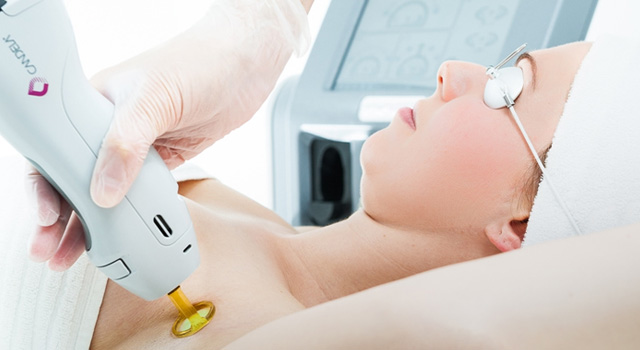
Laser works by directing light toward pigment in the hair follicle. It is especially useful for efficiently reducing dark, coarse hair across larger areas such as the underarms, legs, bikini area, chest, back, neck, and jawline.
The word “permanent” needs context. FDA documentation for the GentleMax family defines permanent hair reduction as a long-term, stable decrease in hairs regrowing when measured at 6, 9, and 12 months after a treatment regimen. That is why a responsible provider will discuss reduction, maintenance, and the influence of hormones instead of promising that every hair will disappear forever. FDA GentleMax Pro Plus documentation (accessdata.fda.gov)
Published studies use specific participants and treatment conditions. They do not predict an individual result; discuss the evidence relevant to your skin, hair and goals with your provider.
Choosing Technology for Phoenix Skin and Sun Exposure
Phoenix sun exposure makes preparation and aftercare especially important. We recommend choosing a practice that asks about recent sun exposure and gives you practical instructions for protecting treated skin before and after each session.
Modern professional systems can offer different wavelengths and cooling approaches, allowing a trained provider to make careful adjustments based on your skin characteristics and treatment area. The goal is not to use the highest setting possible. The goal is to use an appropriate setting that targets the hair while respecting the surrounding skin.
Avoid treating an active tan without specific guidance from your provider. You should also disclose retinoids, acne medications, photosensitizing prescriptions, a history of cold sores near facial treatment areas, and any tendency toward dark marks after irritation. After treatment, temporary redness and swelling are common, and diligent sun protection is particularly valuable in the Valley’s climate. The American Academy of Dermatology advises avoiding direct sunlight on treated skin and following individualized aftercare instructions. American Academy of Dermatology laser safety guidance (aad.org)
When Laser Is the Best Fit, and When It Is Not
Laser can be an excellent first choice for dense, dark body hair because it treats many follicles in a single pass. It is not automatically the best stand-alone option for every hair type, every area, or every long-term goal.
Laser Is Often a Strong Choice for Dark, Coarse Hair
People commonly choose laser for legs, underarms, bikini areas, backs, chests, shoulders, necks, and dark facial hair. Men managing persistent beard-line irritation and razor bumps may also benefit from targeted neck or cheek treatments, while many transgender clients use laser as part of a larger gender-affirming hair-removal plan.
For hormonal hair growth, including PCOS-related coarse hair on the chin, jawline, neck, or body, laser can reduce density and make daily management less demanding. Hormonal shifts can stimulate new growth over time, so maintenance may be part of a realistic plan. If new facial hair growth is sudden or rapidly worsening, speak with a qualified medical provider as well as a hair-removal specialist.
Electrolysis Complements Laser for Light or Remaining Hairs
Electrolysis treats hairs one by one and does not rely on pigment, making it a practical option for white, gray, blonde, red, or very fine hairs that laser may not target well. It can also be the finishing method after laser has reduced a broad field of darker hair.
This combined approach is often useful for facial hair removal, PCOS-related growth, and transgender facial or surgical-site hair removal. Learn more about treatment methods and what to expect from professional electrolysis services for permanent hair removal.
Why Shaving, Waxing, and Threading Keep You in the Cycle
Temporary methods can be useful between appointments, but they do not reduce the number of active follicles. Shaving cuts hair at the skin’s surface, waxing and threading pull it from the root, and tweezing can become time-consuming and irritating, especially on the face.
Before laser, do not wax, tweeze, or thread the intended area unless your provider tells you otherwise. Laser needs the hair root in the follicle as its target. Shaving or trimming is commonly allowed as part of preparation because it removes surface hair without removing the root.
For some people, the largest benefit is not only reduced hair. Fewer shaving sessions may also mean fewer razor bumps, less friction, and less time spent checking the mirror for visible stubble. For more context on a long-term approach, read our comparison of laser and electrolysis for PCOS-related hair growth.
Questions to Ask Before Booking a Laser Package
The right questions help you compare providers on safety and value, not just price per session. Bring these questions to your consultation:
- Which laser technology do you use for my skin tone and hair type?
- Is my hair dark and coarse enough for laser to be effective?
- What preparation steps do you recommend before each session?
- How will recent sun exposure affect my appointment schedule?
- What are the expected side effects, and who can I contact with concerns?
- How many treatments are likely for my area, and what maintenance may be needed?
- If some hairs remain, do you offer electrolysis or another appropriate solution?
Senza Pelo Med Spa has served Phoenix since 1982, and our approach is built around individualized planning rather than standardized packages. We use advanced laser technology and can combine laser with electrolysis when that offers the more sensible long-term path. You can also review current hair-removal pricing by treatment area before your consultation.
Get a Personalized Hair-Removal Plan in Phoenix
You do not need to keep guessing which method fits your skin, hair, and goals. At Senza Pelo Med Spa, we help clients make a clear choice between laser reduction, electrolysis, or a thoughtful combination of both.
Call (602) 246-1966 to schedule a consultation, or Schedule Your Appointment online. We welcome clients from Phoenix, Scottsdale, Paradise Valley, Glendale, Peoria, Mesa, Tempe, and across the Greater Phoenix area.
A Better Standard for Long-Term Hair Reduction
Finding the best laser hair removal provider means finding someone who will be precise about the technology, candid about expected results, and attentive to your skin throughout the process. A realistic plan can replace repetitive shaving and waxing with a more manageable, long-term solution.
For dark, coarse hair over larger areas, laser may be the efficient starting point. For light, fine, isolated, or hormonally persistent hairs, electrolysis may be the better answer. The best plan is the one that respects your skin, your time, and your definition of confidence.
Frequently Asked Questions
How many laser hair removal sessions will I need?
Most people need a series of treatments because hairs respond best at particular points in their growth cycle. The number depends on the treatment area, hair density, hair color, hormones, skin characteristics, and your response over time. Your consultation should include a personalized estimate, not a blanket promise.
Does laser hair removal work on darker skin tones?
Yes, laser can be an option for darker skin tones when the provider uses appropriate technology, settings, and safety precautions. The laser and wavelength should be selected carefully to target hair while minimizing unnecessary heat exposure to surrounding skin.
Is laser hair removal painful?
Most clients describe the sensation as brief warmth or a quick snap against the skin. Comfort varies by body area, hair density, and personal sensitivity, and cooling technology can help make treatment more tolerable.
Can laser hair removal help with ingrown hairs and razor bumps?
It can help many people by reducing the amount of coarse hair that repeatedly grows back and becomes trapped or irritated. Laser is not a replacement for medical care when bumps are infected, severe, or scarring, so consult a medical professional when needed.
Can I get laser hair removal if I have PCOS?
Yes, laser can be helpful for reducing dark, coarse PCOS-related hair, particularly over larger areas. Because PCOS can contribute to new growth over time, some clients need maintenance and may use electrolysis for hairs that are too light or fine for laser.
Can I shave between laser appointments?
Usually, yes. Shaving is commonly permitted because it leaves the follicle root in place for the next laser session. Avoid waxing, tweezing, and threading before treatment unless your provider gives different instructions.
Is electrolysis better than laser for facial hair?
It depends on the hair. Laser may efficiently reduce dense, dark facial hair, while electrolysis is often better for lighter, finer, or scattered hairs. Many facial hair-removal plans use both methods at different stages.

